11 |
548 |
| JOINED: |
Jan 2025 |
| STATUS: |
OFFLINE
|

(07-16-2025, 06:48 PM)sahgwa Wrote: After all, it's just our opinions here.
I hope you are able to Lighten up :)
Thank you for the opportunity to put my positions in writing finally.
Now I will do the easy work of finding writings of old dead Philosophers to validate me. 
There's a reason you separate military and the police. One fights the enemies of the state, the other serves and protects the people. When the military becomes both, then the enemies of the state tend to become the people. - Commander William Adama
28 |
2,671 |
| JOINED: |
Feb 2024 |
| STATUS: |
OFFLINE
|

(07-16-2025, 09:28 PM)Bootless Wrote: Thank you for the opportunity to put my positions in writing finally.
Now I will do the easy work of finding writings of old dead Philosophers to validate me.
French people are depressing :)

10 |
326 |
| JOINED: |
Jun 2025 |
| STATUS: |
OFFLINE
|
07-17-2025, 04:12 AM
This post was last modified: 07-17-2025, 04:15 AM by Ignorant.
(07-16-2025, 10:40 AM)IgnorantGod Wrote: No, I don't think a nihilist is necessarily a 'lazy buddha'. It simply that nihilism is a gateway to 'lazy buddha'. I think developing further on what I call a 'lazy buddha' is a propos.
What I'm referring to by 'lazy buddha' is a person that, as a nihilist, has give up on 'life' after its meeting with Godel's incompleteness theorem. One that isn't helpful neither for the self nor society/species. Do you expect someone that gave up on mostly, or everything, to innovate? That might happen, it's not like I take that state as harmful by itself, but the nature of it is inherently unsettling, which would mean that such population build on the 'lazy buddha' archetype has far higher chance to collapse than innovating.
As far as I know, lot of people need at the very least a certain level of certainty to avoid getting lost in mental knots, and anxiety. There's a need for structures, both physical and psychological. Periods of uncertainty (liminality) were always followed, or initiated with rituals, and going through it as a play. The playfulness keeps the unsettling nature of uncertainty in check, and prevent insanity, fear and violence to spread amongst the people.
What does it mean to give up on life? I think you're talking about depression. It's probably true that nihilism and depression go hand in hand often, but nihilism isn't inherently a depressing state of mind. It's only depressing to people who need externally assigned meaning to their lives. And I don't associate "lazy buddha" with depression. I associate that more with an enlightened sort of contentment with a lazy life. I personally am quite lazy, and a nihilist, but I do innovate simply because I enjoy making new things (games, mostly).
So if by "lazy buddha" you mean "depressed person" then I agree with your statements about a society of such people, but my association with "lazy buddha" is quite different. And indeed, a population of nihilists would have some mental health struggles. As I said earlier, assigning meaning and goals to our own lives is simply too much responsibility for most people. They need to be told what to do (that's a crude way of saying it, but essentially what it boils down to). Do note that those people would be less likely to become nihilists in the first place.
Quote:And then, well, destruction... I've made a comment in another thread on this. My take is that the homo sapien is doomed, whether there is a techno-singularity or not. Whether AI destroys us or not. At the end of the day, if the species survives long enough to face the problem of the dying star, then it'll have to go and colonize space, at which point the species is bound to drastic changes which will ultimately results in a new species.
Sure. We might be doomed, we might not be. In any case, has innovation prolonged the lifespan of our species? Not yet, at least. If we were still hunter-gatherers we would still be here, too. And will innovation accelerate us to our doom? Maybe. It almost did already, once, with the invention of nuclear weapons. With AI and pathogen research we might have more near death experiences in the near future. So I ask, in response to your point about a society of nihilists not innovating much and therefore not lasting long: Is this blind pursuit of ever more efficiency and growth actually good for us? It's not a question we ever really ask, because the pursuit of efficiency and growth is just the natural way of humans, but I think it's a valid question. Did you read that essay I linked about agriculture being a mistake? It argues the point reasonably well (more importantly it's entertaining).
10 |
326 |
| JOINED: |
Jun 2025 |
| STATUS: |
OFFLINE
|
(07-16-2025, 10:44 AM)Bootless Wrote: I looked up nihilism in the Wikipedia, and discovered that most definitions mentioned didn't quite apply to me, although I have my own understanding of what I mean by it. I fear that I must use personal anecdotes and such to provide meaningful examples. I apologize.
The reality of death:
The first time that a person died right in front of me was a profound trauma to me. In a real sense, I reacted as if the whole universe had ended, just ceased, winked out. That would be like placing myself in that person's position at that moment in a solipsist universe.
The trauma intensified as I went out into the hallway to report the death. I saw people going about their mundane chores as if the universe still existed. Like they hadn't even noticed. Shock!!
Life After Death:
A person dies. That death does not result in the immediate causal death of others. They still live. That is the only life after death that I assume to be real. By others, I include of course, all plants and animals too; the ones still alive that is.
Annihilation and Nihilism:
As far as my conscious self goes, my death will be my annihilation. That aim and goal of some Eastern religions. The sought after. But I will have achieved it for free; not through meditation, or yoga or veganism, following a guru, or even reading the Philosophers. For free. It can be said "Annihilation is the birthright of mortals. That is what mortality means by definition."
Implications of my Nihilism:
Seeing as I will die, probably in less than 15 years, what in the world will I do in the meantime? Ah! That is the question.
Further Notes:
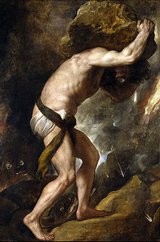
I haven't read Albert Camus, The Myth of Sisyphus. I should do that.
Sorry to hear about your traumatic experience.
Nihilism to me is the logical conclusion of a scientific, natural worldview. It goes hand in hand with determinism, which is perhaps my most core metaphysical belief. What we see is what we get. Our life is just that: A life. It's freeing to me, after all I'm not judged by any higher power or bound by its rules. I am just me. Life is meaningless, so I am free to simply enjoy it.
Quote:Seeing as I will die, probably in ... years, what in the world will I do in the meantime? Ah! That is the question.
Indeed!
10 |
326 |
| JOINED: |
Jun 2025 |
| STATUS: |
OFFLINE
|
07-17-2025, 05:49 AM
This post was last modified: 07-17-2025, 05:52 AM by Ignorant.
(07-16-2025, 06:10 PM)Bootless Wrote: Once upon a time, I used to play video games (Diablo II, and World of Warcraft, and Guild Wars 2) with my Grand daughter. Our characters would get killed, but there was always some way of getting resurrected or re-spawn. One time we were watching something on television and she said "well when they respawn ...". I had to tell her that "there is no respawning, that's only in games".
To meditate for a time, with the sensation of being nothing, one with the One, and then getting up refreshed to go about your day, is not death. Death is final.
On that body, mind, soul thing:
I quote the Wikipedia:
Plato's theory of soul
I was taught that Plato was a great Philosopher who used logic and reason to reach his conclusions. Then one day I actually got around to reading Phaedrus.
Turns out that Socrates claims that he's saying nothing new. He got it from the Pythagoreans who in turn got it from the East.
Let's say my estimation of Plato was decreased somewhat. Even though I never was formally trained in Logic I am aware of some things called Logical Fallacies. Maybe that's an appeal to authority or something.
Now compare and contrast Epicurus. He was a Greek person, exposed from a young age to stories of the gods and heroes and some of the Philosophy too. He ran with the atomic theory. The soul was a thing that was taken for granted in his time. So he didn't deny the gods or the soul. The gods, he said, aren't looking down at you in wrath or favor. They're too occupied with other things. The soul is atomic like the body, made of finer atoms, which dissipate much quicker than the atoms of the body, almost instantly. No immortality of the soul.
I like Epicurus more than Plato. He didn't deny the existence of the gods. I don't either. I have seen Jupiter, Mars, Venus, Mercury, Sol, Artemis, and etc. They are real. They just aren't what people used to think they were.
I have no reason to believe in any immortality; of the gods or myself.
I'm finding The Myth of Sisyphus by Camus quite interesting. It pretty much starts out where I am. It's a little bogged down with references to other Philosophers, which I can't quite associate the name with a concept. Oh well, such is the plight of the under educated.
I'm somewhat of a fan of Plato and also of Socrates, who is omnipresent in Plato's writings, myself. I think if we judge them as products of their time we look upon them much more favorably. Of course they had some takes that we now consider wildly outdated, after all they lived more than 2000 years ago during a time when philosophy was in its infancy (indeed, they could be argued to have jump-started it). To me they always seemed incredibly ahead of their time.
Republic is a particularly impressive work. It's not only prescient, thought-provoking, and foundational, it's also quite entertaining (to me, anyway). I suppose I like the way Plato structures his arguments, his dialectic method. I highly recommend these three lectures on it:
https://www.youtube.com/watch?v=8rf3uqDj00A
https://www.youtube.com/watch?v=rVxSoiHtovM
https://www.youtube.com/watch?v=x4vd21slhmw
I don't know what "it" is when it comes to lecturing, but Michael Sugrue has it. If only he had been a teacher of mine, maybe I would've made something of myself ;)
It's best if you've read the book before watching, obviously.
(I also particularly enjoyed Apology and Crito, which are about Socrates' trial and death sentence, and Symposium).
8 |
278 |
| JOINED: |
May 2025 |
| STATUS: |
OFFLINE
|

(07-17-2025, 04:12 AM)Ignorant Wrote: [...]
So I ask, in response to your point about a society of nihilists not innovating much and therefore not lasting long: Is this blind pursuit of ever more efficiency and growth actually good for us? It's not a question we ever really ask, because the pursuit of efficiency and growth is just the natural way of humans, but I think it's a valid question. Did you read that essay I linked about agriculture being a mistake? It argues the point reasonably well (more importantly it's entertaining).
It has interesting arguments. Though, the paper doesn't mention that the shift to agriculture has allowed a percentage of a population to focus on area such as science and psychology. Can't really argue the rest otherwise.
Now, as for 'lazy buddha', I had put 'life' in quotes because I didn't want to imply a full on depressive state. Rather, it is more a philosophical abandonment. Giving up on creativity, innovation or 'knowledge' because of the fact that there's no way to fully know anything.
As far as the apple tree is concerned, there's probably not much difference between a worm and a human...
Et le ver en dit : - Il y a toujours un pépin dans la pomme...
10 |
326 |
| JOINED: |
Jun 2025 |
| STATUS: |
OFFLINE
|
07-17-2025, 08:45 AM
This post was last modified: 07-17-2025, 08:50 AM by Ignorant.
(07-17-2025, 06:14 AM)IgnorantGod Wrote: It has interesting arguments. Though, the paper doesn't mention that the shift to agriculture has allowed a percentage of a population to focus on area such as science and psychology. Can't really argue the rest otherwise.
It mentions it (see quote below), though the counter argument isn't particularly convincing. Personally I would counter by asking: Did science and psychology make us happier, mentally healthier? Or did it just facilitate the pursuit of efficiency and growth?
Are we happier, on average, than today's hunter-gatherer tribes? I would argue we are not. They aren't struggling with an entire generation of social media addicts, rising suicide rates, opioid crises, you name it. They're just chilling in a forest, and yes they're dying when they get an infection but so what? C'est la vie.
Quote:The progressivist party line sometimes even goes so far as to credit agriculture with the
remarkable flowering of art that has taken place over the past few thousand years. Since
crops can be stored, and since it takes less time to pick food from a garden than to find it
in the wild, agriculture gave us free time that hunter-gatherers never had. Thus it was
agriculture that enabled us to build the Parthenon and compose the B-minor Mass.
While the case for the progressivist view seems overwhelming, it’s hard to prove. How
do you show that the lives of people 10,000 years ago got better when they abandoned
hunting and gathering for farming? Until recently, archaeologists had to resort to indirect
tests, whose results (surprisingly) failed to support the progressivist view. Here’s one
example of an indirect test: Are twentieth century hunter-gatherers really worse off than
farmers? Scattered throughout the world, several dozen groups of so-called primitive
people, like the Kalahari bushmen, continue to support themselves that way. It turns out
that these people have plenty of leisure time, sleep a good deal, and work less hard than
their farming neighbors. For instance, the average time devoted each week to obtaining
food is only 12 to 19 hours for one group of Bushmen, 14 hours or less for the Hadza
nomads of Tanzania. One Bushman, when asked why he hadn’t emulated neighboring
tribes by adopting agriculture, replied, "Why should we, when there are so many
mongongo nuts in the world?"
Quote:Now, as for 'lazy buddha', I had put 'life' in quotes because I didn't want to imply a full on depressive state. Rather, it is more a philosophical abandonment. Giving up on creativity, innovation or 'knowledge' because of the fact that there's no way to fully know anything.
Hmm I wouldn't associate this with nihilism. This sounds more like something a religious person would do, because they already know the "objective truth" and have no incentive to go looking for it. Nihilists are, I would imagine, far more curious people than theists. When they're not depressed, that is. Because that, I still think, is what you're actually talking about. You are conflating depression with nihilism. There is no reason inherent in nihilism for someone to "give up" on creativity, innovation or knowledge. Knowledge in particular is internally rewarding, there is no need for external rewards. In other words, there is no need for someone or something external to tell us to pursue knowledge. The pursuit of knowledge (basically the recognition and application of patterns) is one of our most basic instincts. Observe a baby and you'll see what I mean.
Creativity and innovation can also be internally rewarding. This is perhaps not the case for everyone, but certainly for some. And even in a society of non-nihilists, not everyone is a creative innovator. Those people are rare, as they should be (what society mostly needs is workhorses).
Regardless, the sort of philosophical abandonment you're talking about is fairly common. I would argue that it is as much so in our current society as it would be in a nihilist society, if not more.
28 |
2,671 |
| JOINED: |
Feb 2024 |
| STATUS: |
OFFLINE
|
(07-17-2025, 06:14 AM)IgnorantGod Wrote: It has interesting arguments. Though, the paper doesn't mention that the shift to agriculture has allowed a percentage of a population to focus on area such as science and psychology. Can't really argue the rest otherwise.
Now, as for 'lazy buddha', I had put 'life' in quotes because I didn't want to imply a full on depressive state. Rather, it is more a philosophical abandonment. Giving up on creativity, innovation or 'knowledge' because of the fact that there's no way to fully know anything.
Even without my belief in an 'afterlife' I think that there are too many interesting things to learn and fun things to do in life , than to waste time being miserable. if you engage your brain enough it wants more! I have been depressed from both chemicals and 'philosophy' but what snaps me out of it is helpful guidance from others who show me how to use my energy in a more positive way.
I like the phrase 'get busy living or get busy dying. '
The creative impulse starts biologically, and can be channeled into the 'arts', I think we all have it; which is why most musicians are their most innovative in their teens and twenties, because that is when biologically we have all this energy that we need to get out and create with. If it's not physical children, then it's mind-children.
Then there is the argument against suicide as being selfish or an affront to God or the Universe but there is a funny interview with Thomas Ligotti, the famous(?) nihilistic antinatalist horror writer when they ask him 'if life is so pointless why don't you just kill yourself?' 'because I already exist, and it wont change the facts.' thats paraphrasing.
Facts like life is full of suffering - but that doesn't mean logically ipso facto you should off yourself, because even the most depressed can have manic(?) happy modes.
In other words, focus on the positives and make use of them, because whether this life is all you have ever, it's all you have right now.
8 |
278 |
| JOINED: |
May 2025 |
| STATUS: |
OFFLINE
|
(07-17-2025, 08:45 AM)Ignorant Wrote: [...]
Hmm I wouldn't associate this with nihilism. This sounds more like something a religious person would do, because they already know the "objective truth" and have no incentive to go looking for it. Nihilists are, I would imagine, far more curious people than theists. When they're not depressed, that is. Because that, I still think, is what you're actually talking about. You are conflating depression with nihilism. There is no reason inherent in nihilism for someone to "give up" on creativity, innovation or knowledge. Knowledge in particular is internally rewarding, there is no need for external rewards. In other words, there is no need for someone or something external to tell us to pursue knowledge. The pursuit of knowledge (basically the recognition and application of patterns) is one of our most basic instincts. Observe a baby and you'll see what I mean.
[...]
Hmmm, I do have a hard time to explain my thoughts sometime. The word 'knowledge' definitely wasn't the one I should have used. Maybe 'learning' would be more accurate? Basically, what I refer to the 'lazy buddha' archetype, without going into individual differences, is that thought sequence which I'd translate as follow : Since one cannot entirely know anything, then nothing is fundamentally worth pursuing.
By abandoning, I say it would be to abandon logic and rationality because of their inherent flaws, and human inherent flaws, and physical matter inherent flaws (or all flaws are emergent?). I'd say, disillusions rather than depression, but again, I fail more often than not to communicate my thoughts, sorry.
But I think I have to agree with you that my opinion of nihilism and nihilist may lean to much in the pessimist side of the spectrum, that is mainly because of my own experience with it. This bout with you was certainly helpfull, thank you for indulging me!
PS - I really like how you describe knowledge.
As far as the apple tree is concerned, there's probably not much difference between a worm and a human...
Et le ver en dit : - Il y a toujours un pépin dans la pomme...

504 |
6,234 |
| JOINED: |
Dec 2023 |
| STATUS: |
OFFLINE
|

It's kind of off-topic maybe...
But I have found terms like "nihilism" (among quite a few others) are used, at times, as a taint..., a pejorative.
(Not here though.. which is oddly out of sync with the larger internet wilds.)
I am not well versed in the manner we have segmented our "human algorithms of thought"... These areas of interpretation and discussion were never included in my education, which I admit, is scant. As a mostly intrusive impulse, I enjoy the exercise and foray in such discussions... but I thought it worth observing that certain stigmas and "reputations" exist surrounding these words... which people seem inclined (OR COMPELLED) to "decide" which is "best" thus obscuring the entire point of the thought exercise.
Apologies if it strays too far off the green and into the rough.
|